
September begins with several important economic events that are likely to capture investors’ attention.
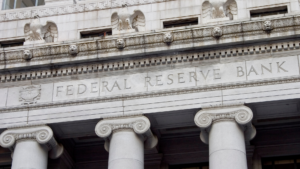
The August employment report is scheduled for September 4. The following week brings new inflation data, and then the Federal Reserve meets September 15 and 16 to determine its next move on interest rates.
Recent economic data have given the Federal Reserve plenty to consider. Inflation remains above the Fed’s target, while questions about the strength of the labor market have become increasingly important. Federal Reserve Chair Kevin Warsh recently indicated that additional action could be necessary if policymakers are not confident inflation is moving back toward the Fed’s goal.
That combination has investors focused on every new piece of economic data. But for long-term investors, there may be a more important question:
Should your investment strategy depend on correctly predicting what the Federal Reserve will do next?
One Report Can Change Expectations
Employment reports can provide important information about the health of the economy. Investors look at job creation, unemployment, wage growth, and other labor market measures for clues about where the economy may be headed. Those numbers can also influence expectations about interest rates.
A stronger labor market could reinforce concerns that inflationary pressures may remain elevated. Signs of weakness could create a different set of concerns and potentially change expectations for Federal Reserve policy.
The important word is expectations.
Markets are not simply reacting to what is happening today. They are constantly adjusting to what investors believe may happen next. That means one economic report can quickly change the market’s outlook.
The Prediction Keeps Changing
This is one of the challenges with building an investment strategy around economic forecasts.
- The forecast itself rarely stays the same.
- New employment data arrives.
- Inflation changes.
- Corporate earnings provide additional information.
- Federal Reserve officials speak.
- Geopolitical events affect energy prices and economic expectations.
Each new development can cause investors and economists to revise what they believe the Federal Reserve will do.
That does not mean these developments should be ignored. They are important parts of understanding the economy. But understanding what is happening is different from believing we can consistently predict what happens next.

The Market Is Already Paying Attention
By the time an economic report reaches your television, phone, or inbox, financial markets are already processing the information. Millions of investors, institutions, analysts, and trading systems are evaluating the same data.
This creates an additional challenge for anyone attempting to trade around a Federal Reserve decision. It is not enough to correctly predict whether the Fed will rise, lower, or maintain interest rates.
An investor would also need to understand what the market already expects and determine how prices will respond if the actual decision differs from those expectations. That can be extremely difficult to do consistently.
What Does This Mean for Your Portfolio?
At BCA Private Wealth, we believe your investment strategy should begin with your financial plan, not the outcome of the next economic report.
Your goals, time horizon, income needs, risk tolerance, tax situation, and broader financial circumstances should play a much larger role in determining how your portfolio is positioned.
If every new data point causes a change in strategy, a long-term investment plan can quickly become a series of short-term reactions.
Focus on What You Can Control
Periods like this can instead be an opportunity to review the areas of your financial life where you have greater control.
- Is your portfolio still aligned with your goals?
- Are you taking an appropriate amount of risk?
- Are your upcoming spending and income needs accounted for?
- Are you appropriately diversified?
- Has something changed in your financial situation that actually requires an adjustment?
Those questions are often more useful than trying to determine exactly what the Federal Reserve will announce later this month.
Investing With Discipline
Economic data matters. Interest rates matter. Federal Reserve policy matters. But a disciplined investment strategy does not require correctly predicting every change in the economy.
The goal is not to know what the next report will say. It is to build a financial plan that does not depend on knowing.
At BCA Private Wealth, we believe staying focused on your long-term strategy can help separate meaningful financial decisions from the constant stream of economic predictions and market headlines.
Your investment strategy should not depend on predicting the Federal Reserve’s next move. If you are looking for a financial plan built around your goals rather than short-term market forecasts, schedule a conversation with our team to learn more about our disciplined approach to investing.
Copyright © 2026. BCA Private Wealth. All rights reserved.
Our mailing address is:
BCA Private Wealth
15 Halton Green Way
Greenville, SC 29607
Disclosure:
BCA is a Securities and Exchange Commission registered investment advisor. The advisory services of BCA Private Wealth are not made available in any jurisdiction in which BCA Private Wealth is not registered or is otherwise exempt from registration.
Please review BCA Private Wealth Disclosure Brochure for a complete explanation of fees. Investing involves risks. Investments are not guaranteed and may lose value.
This material is prepared by BCA Private Wealth for informational purposes only. It is not intended to serve as a substitute for personalized investment advice or as a recommendation or solicitation or any particular security, strategy, or investment product.
No representation is being made that any account will or is likely to achieve future profits or losses similar to those shown. You should not assume that investment decisions we make in the future will be profitable or equal the investment performance of the past. Past performance does not indicate future results.
Sources
U.S. Bureau of Labor Statistics — Employment Situation Release Calendar
Federal Reserve — FOMC Meeting Calendar
Federal Reserve — Chairman Kevin Warsh, Jackson Hole Remarks, August 28, 2026