
Tax season can be a stressful time for many people, but proper preparation can make a big difference. Planning ahead allows you to stay organized, avoid common filing mistakes, and feel more confident when submitting your return. Whether you file on your own or with professional help, these five tips can help you prepare effectively.
1. Organize Your Financial Documents Early
One of the best ways to reduce tax-season stress is to gather your documents well in advance. This includes W-2s, 1099s, bank statements, and receipts for expenses that may qualify for deductions. Keeping your records organized in a folder or digital system makes the filing process faster and helps ensure nothing important is overlooked.
2. Track All Sources of Income and Expenses
Be sure to account for every source of income, including part-time work, freelance projects, or side businesses. Keeping clear records of expenses throughout the year can also help you identify potential deductions. Accurate tracking reduces the risk of errors and makes it easier to support your claims if questions arise later.
3. Understand Available Deductions and Credits
Tax deductions and credits can have a major impact on your final tax bill. Deductions reduce taxable income, while credits directly lower the amount of tax you owe. Education costs, charitable donations, medical expenses, and childcare expenses are just a few examples. Taking time to review what applies to you can lead to meaningful savings.
4. Review Life Changes from the Past Year
Life events such as starting a new job, moving to a different location, becoming financially independent, or changing your education status can affect how you file your taxes. These changes may impact your filing status, eligibility for credits, or the amount you owe. Reviewing them carefully helps ensure your return reflects your current situation.
5. Know Your Deadlines
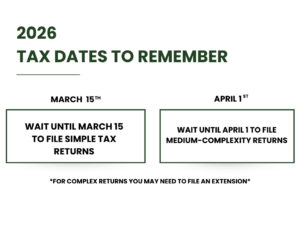
Missing tax deadlines can lead to penalties, interest, and unnecessary stress. Mark key dates on your calendar, including the deadline to file your return and any estimated tax payment due dates if you’re self-employed or have additional income. If you anticipate needing more time, remember that you can file for an extension.
However, an extension to file is not an extension to pay. Any taxes owed are still due by the original deadline. Knowing this ahead of time helps you plan your finances accordingly. By staying organized, informed, and proactive, you can approach tax season with confidence. A little preparation now can save time, reduce stress, and help you make the most of your tax return.
Copyright © 2026. BCA Private Wealth. All rights reserved.
Our mailing address is:
BCA Private Wealth
15 Halton Green Way
Greenville, SC 29607
Disclosure:
BCA is a Securities and Exchange Commission registered investment advisor. The advisory services of BCA Private Wealth are not made available in any jurisdiction in which BCA Private Wealth is not registered or is otherwise exempt from registration.
Please review BCA Private Wealth Disclosure Brochure for a complete explanation of fees. Investing involves risks. Investments are not guaranteed and may lose value.
This material is prepared by BCA Private Wealth for informational purposes only. It is not intended to serve as a substitute for personalized investment advice or as a recommendation or solicitation or any particular security, strategy, or investment product.
No representation is being made that any account will or is likely to achieve future profits or losses similar to those shown. You should not assume that investment decisions we make in the future will be profitable or equal the investment performance of the past. Past performance does not indicate future results.