

Charitable giving is meaningful for many families, but how you give can matter just as much as how much you give. For retirees who are charitably inclined, a strategy called a Qualified Charitable Distribution (QCD) can be a powerful way to support causes you care about while potentially reducing taxes at the same time.
If you’re age 70½ or older and have an IRA, this strategy may be worth a closer look.
What Is a QCD?
A Qualified Charitable Distribution allows you to donate money directly from your IRA to a qualified charity without the distribution being counted as taxable income.
You can give up to $111,000 per year per individual through QCDs (indexed for inflation), and the distribution can also satisfy part or all of your Required Minimum Distribution (RMD) once you reach the applicable age.
Because the money never hits your bank account, it typically stays off your taxable income entirely, which can help reduce taxes, Medicare premiums, and the taxation of Social Security benefits.
Why QCDs Can Be So Powerful
Using a QCD may provide several benefits:
- Lower taxable income —which may help keep you in a lower tax bracket
- Reduced Medicare IRMAA surcharges
- Less Social Security taxation
- A more efficient way to give than writing a check
For many retirees who already give to charities each year, this can be one of the most tax-efficient ways to do so.
Important Rules to Know
To qualify, a few key requirements must be met:
- You must be age 70½ or older at the time of the distribution.
- The funds must come from an IRA (not directly from a 401(k) or employer plan).
- The payment must go directly to a qualified charity — not to you first.
- Donor-Advised Funds and private foundations are not eligible recipients.
- The distribution must be properly coded and documented for tax reporting.
The small details matter. Executing a QCD incorrectly can accidentally trigger taxes.
Who Should Consider a QCD?
QCDs often make sense for retirees who:
- Are already making charitable donations each year
- Want to reduce taxable income rather than increase deductions
- Are managing RMDs and tax brackets
- Want to simplify their tax picture
When coordinated properly, QCDs can be an elegant way to align generosity with smart planning.
Let’s Make Sure It’s Set Up Correctly
QCDs can deliver meaningful tax benefits but only when executed properly and aligned with your overall financial strategy. Timing, account selection, and reporting all matter.
If you’re considering charitable giving this year or want to explore whether a QCD makes sense for your situation, we’re happy to help walk you through the process.
Call us if you have questions. We’re here to build a future you can follow.
Golf Tip of the Week
Senior Golf Tip of the Week: Train Your Short Game Creativity

As we mature, it’s common for long shots to fade and more demanding swing mechanics to become a challenge. But there’s a part of your game that never stops gaining value with age — your short game. According to Golf Digest, one of the best ways older golfers can stay sharp and shoot lower scores is by making purposeful, creative practice part of their routine, especially around the greens.
What the Article Recommends
- Symmetry Matters: Short game legend Brad Faxon suggests making your chipping motion the same length backward and forward. This “symmetrical” motion naturally leads to smoother, more consistent contact. Older bodies often don’t tolerate big, jerky swings as well anymore — dialing in a compact, balanced movement lets you control distance through swing size and club loft rather than muscle.
- Get Creative with Practice: Instead of mindlessly hitting the same short shots over and over, Faxon encourages golfers to experiment with a variety of trajectories — high lobs, lower runners, soft pitches — and to use different clubs for these. Even if it feels awkward at first, this creativity builds feel, shot selection awareness, and adaptability, all of which pay dividends during a round. Trying different shots also strengthens your understanding of the golf course and gives you more options when you’re on the clock.
How to Practice This Tip
- At the range or chipping green:
- Start with simple chip shots: set up with a narrow stance and focus on matching backswing and follow-through.
- Then, challenge yourself with shape and height practice: mix in high pitches, bump-and-runs, and low runners.
- Use different clubs and study what each does from the same spot.
- Try to notice how different trajectories react on the green — this helps you choose the right shot on the course, not just in practice.
Why This Works for Seniors
- Creative short game practice emphasizes touch and feel over brute strength, which gets harder to generate with age.
- Smoother, shorter motions are easier on joints and muscles yet can improve consistency and scoring.
- You learn options — high, low, soft, bump-and-run — so your course management becomes smarter and less reliant on distance.
Whether you’re saving par or attacking pins, better use of your wedges and pitches can be the difference between a frustrating round and a truly enjoyable one.
Article adapted from Golf Digest. Read full article here: Short-game legend Brad Faxon shares short-game advice for older golfers.
Recipe Tip of the Week
Chocolate Peanut Butter Pie
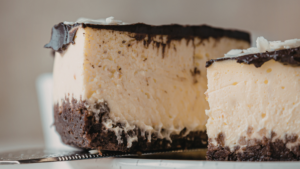
Ingredients
For the Crust
- 25 chocolate sandwich cookies (like Oreos)
- 5 tablespoons salted butter, melted
For the Filling
- 1 cup creamy peanut butter
- 8 oz cream cheese, softened
- 1¼ cups powdered sugar
- 8 oz whipped topping (such as Cool Whip), thawed
Instructions
- Preheat & Prepare Crust:
Preheat your oven to 350 °F. Crush the chocolate sandwich cookies into fine crumbs (use a food processor or put them in a sealed bag and crush with a rolling pin).
Mix the crumbs with the melted butter until evenly coated.
Press the mixture firmly into the bottom and up the sides of a pie plate to form the crust.
Bake for 5–7 minutes until set, then remove and let cool completely. - Make the Filling:
In a large bowl, beat the peanut butter and softened cream cheese together until smooth.
Add the powdered sugar and continue beating until fully combined.
Fold in the thawed whipped topping and mix until silky and evenly blended. - Assemble & Chill:
Pour the peanut butter filling into the cooled chocolate crust, smoothing the top with a spatula.
Refrigerate the pie for at least 4 hours (overnight is best) so it firms up before slicing. - Serve:
Slice into small wedges — this pie is rich and decadent! Serve chilled on its own or with extra whipped topping, chocolate drizzle, or chopped nuts if desired.
Quick Tip
Make ahead and keep chilled up to 5 days; leftovers stay delicious in the fridge.
Recipe adapted from The Pioneer Woman. Read full recipe here: Chocolate Peanut Butter Pie.
Travel Tip of the Week
Top 3 Winter Trips in the U.S. to Take Grandchildren

When planning a winter vacation with your grandkids, choosing destinations that blend adventure, accessibility, and a variety of activities is key. A recent roundup of favorite winter family destinations highlights spots that offer snowy fun, charming towns, and indoor/outdoor options that keep kids engaged and adults relaxed.
- Florida – Sunshine and Theme Parks
Florida is a standout choice for families looking to escape cold weather. With reliably warm winter temperatures and a wealth of iconic attractions, the state offers year‑round fun that grandkids will love. Orlando is especially ideal, featuring Walt Disney World, Universal Studios, and other theme parks that provide endless entertainment for kids of all ages. Beyond rides and shows, families can explore nature areas like the Everglades or take a short trip to the beach, making Florida a versatile winter destination.
- Aspen, Colorado – Snowy Mountain Adventure
For families who want a classic winter experience, Aspen delivers snowy scenery, skiing, and mountain town charm. Winter in Aspen means easy access to ski slopes suitable for beginners and intermediates, cozy mountain lodges, and plenty of outdoor experiences that kids and adults can enjoy together. It’s an excellent choice if you want to pair physical activities (like skiing or sledding) with relaxed après‑ski ambiance and spectacular mountain views.
- Utah – Park City and Mountain Resorts
Utah is another top winter pick, especially around Park City, where world‑class skiing meets family‑friendly activities. In addition to snow sports, many resorts offer snow tubing, sleigh rides, and cultural seasonal events. Utah’s scenic landscapes and variety of winter options make it easy to tailor a trip to fit the interests and energy levels of both adults and children.
Why These Work for Families
- Weather variety: From warm sunshine in Florida to snowy mountains in Colorado and Utah, you can tailor your trip to the type of winter experience you want.
- Kid‑friendly activities: Whether it’s theme park thrills or winter sports and festivals, these destinations offer plenty of options to keep grandchildren entertained.
- Grandparent‑friendly logistics: All three destinations have good infrastructure, accessible activities, and a range of accommodation choices — perfect for multi‑generation travel.
Article adapted from Kid & Coe. Read full article here: Our Favorite Winter Family Destinations for 2025.
Copyright © 2026. BCA Private Wealth. All rights reserved.
Our mailing address is:
BCA Private Wealth
15 Halton Green Way
Greenville, SC 29607
Disclosure:
BCA is a Securities and Exchange Commission registered investment advisor. The advisory services of BCA Private Wealth are not made available in any jurisdiction in which BCA Private Wealth is not registered or is otherwise exempt from registration.
Please review BCA Private Wealth Disclosure Brochure for a complete explanation of fees. Investing involves risks. Investments are not guaranteed and may lose value.
This material is prepared by BCA Private Wealth for informational purposes only. It is not intended to serve as a substitute for personalized investment advice or as a recommendation or solicitation or any particular security, strategy, or investment product.
No representation is being made that any account will or is likely to achieve future profits or losses similar to those shown. You should not assume that investment decisions we make in the future will be profitable or equal the investment performance of the past. Past performance does not indicate future results.