
Balancing Safety, Opportunity, and Inflation Risk
Holding cash can feel comforting, especially after market volatility or unsettling headlines. Cash feels safe, predictable, and readily available. But too much cash, held for the wrong reasons or for too long, can quietly work against long-term financial goals.
The real question isn’t “Should I hold cash or invest?”
It’s “Which dollars should be held safely—and which should be working for growth?”
This is where having a clear structure matters.
Why Too Much Cash Can Be a Problem
Cash plays an important role, but it has limitations. Over time, inflation reduces purchasing power, meaning money that sits idle may buy less in the future than it does today. In addition, staying on the sidelines for too long can mean missing opportunities for long-term growth.
That doesn’t mean cash is bad, it means cash needs a purpose.
The Bucket Strategy: Putting Cash in the Right Place
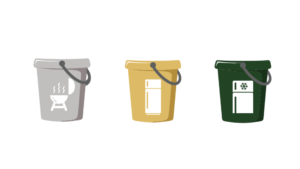
At BCA Private Wealth, we use a bucket-based approach to help clients balance safety, growth, and peace of mind. Instead of treating all money the same, each dollar is organized by when it is needed.
Short-Term Money (1–5 Years)
This is money you’ll need soon—emergency reserves, upcoming purchases, or near-term expenses. This is where safety and liquidity matter most. Holding this money conservatively helps protect against having to sell investments at the wrong time.
Mid-Term Money (6–10 Years)
These dollars still need protection, but they also need to grow. Holding too much of this money in cash may feel safe, but it can struggle to keep up with inflation over time.
Long-Term Money (10+ Years)
This is your growth engine—retirement income, legacy planning, and long-range goals. Keeping long-term money in cash for “safety” often creates a different risk: not growing enough to support future needs.
When money is placed into the wrong buckets—such as long-term funds sitting in cash—we call this a mismatch. Over time, these mismatches can create stress, missed opportunities, and difficult decisions later on.
The Goal Isn’t Less Cash—It’s Better Alignment
This isn’t about minimizing cash. It’s about making sure every dollar has:
- A clear purpose
- A defined timeline
- An appropriate investment approach
When cash is held intentionally for near-term needs, investors often feel more comfortable allowing long-term investments to do what they’re designed to do, grow through market cycles.
Peace of Mind Comes from Structure
One of the biggest benefits of organizing money by purpose is emotional clarity. When markets fluctuate, clients know which dollars are affected and which aren’t. That clarity helps reduce emotional decisions and supports long-term discipline.
As we move through the year, it may be worth asking:
- Do I know exactly what my cash is for?
- Is any long-term money sitting idle out of fear rather than strategy?
- Does my portfolio reflect both safety and opportunity?
If you’d like help reviewing how your cash and investments are positioned or want to make sure your money is working in the right places, we’re here to help.
Call us if you have questions. We’re here to build a future you can follow.
Golf Tip of the Week
Regain Distance with Age-Smart Swings

Increase Stability & Flexibility — Add a Short Pre-Round Routine
A recent Golf Digest article suggests that one of the smartest ways older golfers can keep swinging well — maybe even better — is by improving core stability and body mobility before each round.
- Stability matters more than brute strength. As we age, maintaining a solid “base” is more important than trying to swing harder. A stable base helps you swing smoothly, stay balanced, and avoid common swing breakdowns.
- Mobility = a better turn, more swing arc, more consistent shots. Tight hips, stiff spine, or limited shoulder mobility can shrink your swing and rob you of both power and consistency. But targeted stretches can restore some of that range — giving you a smoother, more natural swing.
- You don’t need a full gym — just 10 minutes and consistency. The article outlines a short, simple routine (≈ 10 minutes) that works on balance, core, hips, and spine — all things that directly affect golf performance.
How to Use This Tip on the Course This Week
- Before teeing off (or at the range), take 10 minutes to run through a stability-focused warm-up. You can do something like: single-leg balance drills, gentle hip openers, torso rotations, or light core activation. Use a club or your own body weight — no gym needed.
- Focus on mobility for hips, spine, and shoulders. A few minutes of light lunges, torso twists, or gentle spinal rotations can make a big difference in how full your swing feels.
- During your round, pay attention to balance and posture. Instead of “muscling” the shot, try to swing from a stable base: let your core and posture do the work.
- Pair this physical prep with shorter backswing or controlled tempo if you like — but the key is giving your body a stable, mobile foundation before you try to hit your best shots.
Why This Tip Works Especially for Seniors
- As flexibility and strength naturally decline with age, stability and mobility become more valuable than raw power. A good base and freer joints let you swing more naturally and consistently.
- The 10-minute routine is realistic — no drastic lifestyle overhaul needed. Just a small, regular investment of time that can pay big dividends in comfort, consistency, and performance.
- By emphasizing mobility and balance over brute force, you reduce injury risk, swing breakdowns, and fatigue — keeping the game fun and sustainable.
Golf tip adapted from Golf Digest. Read the full article here: Try this 10-minute workout for improved stability & Flexibility for golf: Try this killer stretch to get more turn.
Recipe Tip of the Week
Classic Sweet Potato Casserole
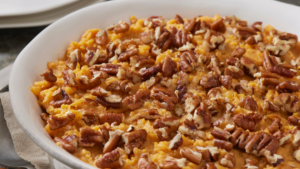
Ingredients:
- Sweet potatoes — whole, enough to yield about 5 cups mashed sweet potato flesh.
- Butter — ¼ cup
- Milk — ½ cup or a similar liquid
- Sugar — ¼ cup
- Spices/flavorings — such as cinnamon (1/2 tsp.), salt (1/2 tsp), or vanilla (1 tsp)
- Topping: mini-marshmallows and chopped pecans (or nuts of your choice)
Instructions:
- Preheat the oven to 375 °F (190–200 °C).
- Prepare the sweet potatoes: Roast or otherwise cook the potatoes until very tender; then let them cool enough to handle.
- Scoop & mash: Remove the potato flesh from the skins and place in a large bowl. Mash thoroughly.
- Mix in the add-ins: Add butter, milk, sugar, salt, cinnamon (or chosen spices), and stir until the mixture is smooth and evenly combined.
- Transfer to baking dish: Spread the mashed sweet potato mixture into a greased casserole dish.
- Add topping: Sprinkle chopped pecans (or nuts) over the top, then add a layer of mini marshmallows.
- Bake: Bake in the oven until the casserole is heated through, the edges start bubbling, and the marshmallows/nuts are toasted or golden — keeping an eye so marshmallows don’t over-brown.
- Cool slightly and serve: Let the dish rest a few minutes before serving, so it sets up and is easier to serve warm.
Recipe Tip Adapted from The Cookful. Read full article here: Classic Sweet Potato Casserole.
Travel Tip of the Week
Embrace “Off-Peak” Timing for Winter Getaways

Here are three under-the-radar winter destinations in the U.S. that come recommended from Travel + Leisure as affordable — great for a winter getaway with less crowd and more value.
Dallas, Texas
- Mild winter weather, plenty of culture, and a lower cost compared to many vacation hotspots — good pick if you want city-style comforts without the holiday-season price surge.
- Great balance of dining, entertainment, history, and overall convenience — a solid city-escape break from cold, heavy winters elsewhere.
Tampa, Florida
- Trade winter chill for warmth — ideal for those who’d rather skip snow and ice. Tampa offers sunshine, proximity to beaches, and nice out-of-season rates.
- With relatively low combined cost (flight + hotel), it’s a surprisingly budget-friendly option for a “winter escape” that feels like a summer retreat.
Minneapolis, Minnesota
- For travelers who enjoy cold-weather charm but don’t want big crowds, this city offers culture, arts, cozy indoor comforts, and good deals in winter.
- It’s a smart pick if you want a more authentic “winter city escape” — with snow, brisk air, and winter ambiance — without the high price tag that some ski-resort areas demand.
Travel tip adapted from Travel + Leisure. Read the full article here: 10 Cheapest Places to Travel in the U.S. This Winter, According to Kayak.
Copyright © 2026. BCA Private Wealth. All rights reserved.
Our mailing address is:
BCA Private Wealth
15 Halton Green Way
Greenville, SC 29607
Disclosure:
BCA is a Securities and Exchange Commission registered investment advisor. The advisory services of BCA Private Wealth are not made available in any jurisdiction in which BCA Private Wealth is not registered or is otherwise exempt from registration.
Please review BCA Private Wealth Disclosure Brochure for a complete explanation of fees. Investing involves risks. Investments are not guaranteed and may lose value.
This material is prepared by BCA Private Wealth for informational purposes only. It is not intended to serve as a substitute for personalized investment advice or as a recommendation or solicitation or any particular security, strategy, or investment product.
No representation is being made that any account will or is likely to achieve future profits or losses similar to those shown. You should not assume that investment decisions we make in the future will be profitable or equal the investment performance of the past. Past performance does not indicate future results.