

For many families, one of the most meaningful financial goals is helping children and grandchildren build a strong foundation for the future. Whether that means funding higher education, providing a financial head start, or creating long-term investment opportunities, there are several tools available to help achieve those goals.
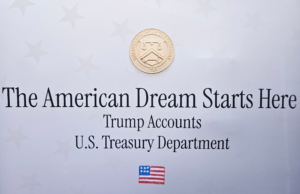
Recently, the introduction of Trump Accounts has added a new option to the conversation. While these accounts offer unique features, they are just one piece of a broader planning strategy.
Understanding how Trump Accounts, 529 Plans, and Custodial Accounts differ can help families determine which approach—or combination of approaches—may be most appropriate for their goals.
Defining the Goal First
Before selecting an account, it is important to identify the primary objective.
- Are you primarily saving for education?
- Are you trying to create long-term wealth for a child or grandchild?
- Do you want flexibility in how the funds may eventually be used?
- The answers to these questions often determine which account structure may provide the greatest benefit.
529 Plans: Built for Education
A 529 Plan is specifically designed to help families save for qualified education expenses.
Contributions are made with after-tax dollars, but investments grow tax-deferred and qualified withdrawals for education expenses are generally tax-free.
Potential Advantages
- Tax-free growth for qualified education expenses.
- High contribution limits.
- Potential state tax benefits in certain states.
- Account owner maintains control of assets.
- Can be used for college, certain K-12 expenses, and some vocational programs.
Potential Considerations
- Tax benefits are generally tied to qualified education expenses.
- Non-qualified withdrawals may be subject to taxes and penalties on earnings.
- Less flexibility if the beneficiary chooses not to pursue higher education.
For families with a strong education funding objective, 529 Plans often remain one of the most effective planning tools available.
Trump Accounts: Focused on Long-Term Investing
Trump Accounts are designed to encourage long-term investing and wealth accumulation for children.
Unlike a 529 Plan, the account is not solely focused on education. Instead, it provides exposure to broad U.S. stock market investments with the goal of long-term growth.
Eligible children may also receive certain government seed contributions under current legislation.
Potential Advantages
- No earned income requirement for the child.
- Encourages long-term investing from an early age.
- Potential government-funded seed contribution for eligible children.
- Broader use than education-specific accounts.
Potential Considerations
- Contributions can be made with both pre-tax and after-tax dollars.
- Future distributions are generally taxable under current rules.
- Investment options are limited to broad market index strategies.
- Funds generally cannot be accessed until adulthood.
For families interested in creating a long-term investment foundation, Trump Accounts may provide a valuable complement to existing planning strategies.
Custodial Accounts: Maximum Flexibility
Custodial accounts, often established under UGMA or UTMA rules, allow assets to be invested on behalf of a minor. Unlike 529 Plans, there are generally no restrictions on how the funds may ultimately be used.
Potential Advantages
- Broad investment flexibility.
- Funds can be used for education, business ventures, housing, or other purposes.
- No restrictions tied to specific expenses.
- Wide range of investment choices.
Potential Considerations
- Assets become the child’s property upon reaching the age of majority.
- Potential impact on financial aid calculations.
- Less control for parents once ownership transfers.
- Tax rules may be less favorable than certain education-specific accounts.
For families prioritizing flexibility, custodial accounts may offer opportunities that more specialized accounts do not.

Which Account Is Right for Your Family?
The reality is that many families do not need to choose just one option.
In fact, multiple accounts may work together to address different objectives.
A family might use:
- A 529 Plan for education funding.
- A Trump Account for long-term wealth accumulation.
- A Custodial Account for additional flexibility and gifting opportunities.
Each account serves a different purpose, and combining strategies may help create a more comprehensive plan.
Looking Beyond the Account
While account selection is important, successful planning often extends beyond choosing the right investment vehicle.
Families should also consider:
- Estate planning goals.
- Beneficiary designations.
- Tax planning opportunities.
- Intergenerational wealth transfer strategies.
- Financial education for children and grandchildren.
The account itself is simply a tool. The broader objective is creating opportunities and preparing future generations for financial success.
Final Thoughts
Many families want to help children and grandchildren succeed financially, but choosing the right strategy can be overwhelming. From education planning and tax-efficient gifting to long-term wealth transfer, the right approach often involves more than selecting a single account. If you’re looking for guidance on creating opportunities for the next generation, feel free to give us a call. We’d welcome the opportunity to help!
The information provided is based on our current understanding of Trump Accounts. Rules, provisions, and implementation details may change and should be reviewed as further guidance is released.
Copyright © 2026. BCA Private Wealth. All rights reserved.
Our mailing address is:
BCA Private Wealth
15 Halton Green Way
Greenville, SC 29607
Disclosure:
BCA is a Securities and Exchange Commission registered investment advisor. The advisory services of BCA Private Wealth are not made available in any jurisdiction in which BCA Private Wealth is not registered or is otherwise exempt from registration.
Please review BCA Private Wealth Disclosure Brochure for a complete explanation of fees. Investing involves risks. Investments are not guaranteed and may lose value.
This material is prepared by BCA Private Wealth for informational purposes only. It is not intended to serve as a substitute for personalized investment advice or as a recommendation or solicitation or any particular security, strategy, or investment product.
No representation is being made that any account will or is likely to achieve future profits or losses similar to those shown. You should not assume that investment decisions we make in the future will be profitable or equal the investment performance of the past. Past performance does not indicate future results.
Advisory services through BCA Private Wealth, Inc., a Securities and Exchange Commission registered investment advisor. See full disclosure https://bcaprivatewealth.com/disclosures/.
Sources
- IRS Publication 970 – Tax Benefits for Education
- SEC Investor Bulletin – 529 Plans
- FINRA Investor Education – Custodial Accounts (UGMA/UTMA)
Important Disclosure
The information provided is based on our current understanding of Trump Accounts and related legislation, proposed IRS regulations, and currently available implementation guidance. Rules, eligibility requirements, contribution limits, tax treatment, and administrative procedures may change as additional legislation, final regulations, or IRS guidance is issued. This material is for informational purposes only and should not be construed as tax, legal, or investment advice. Please consult your tax and legal professionals regarding your specific circumstances.