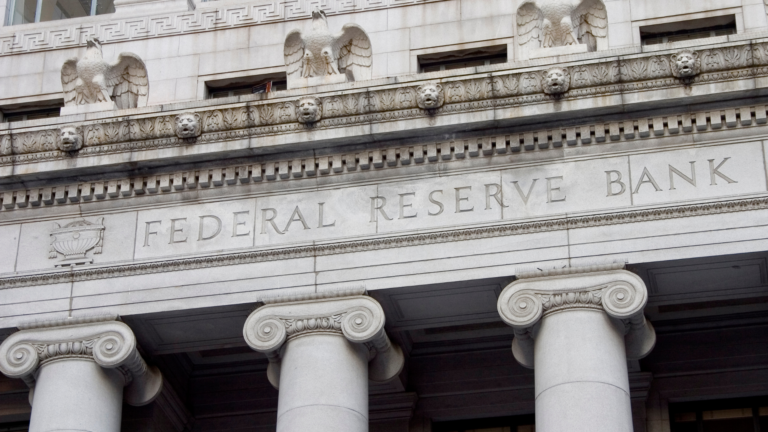
At its September meeting, the Federal Reserve raised interest rates, putting renewed attention on borrowing costs, savings rates, bonds, and the broader economy. ¹
The decision comes as inflation remains an important concern. Consumer prices rose 3.4% over the 12 months ending in August, reinforcing the challenge the Federal Reserve faces as it works to balance inflation, economic growth, and employment. ²
While a change in interest rates can quickly make headlines, what matters most is understanding how higher rates could affect different parts of your financial life.
Why Did the Fed Raise Rates?
The Federal Reserve uses interest rates as one of its primary tools for managing inflation and economic activity.
When inflation remains elevated, raising the federal funds rate can help slow demand by making borrowing more expensive. Over time, tighter monetary policy can help reduce inflationary pressure. ³
However, the federal funds rate is not the rate you receive on your savings account or pay directly on a mortgage. Instead, changes in the Fed’s rate can influence many other interest rates throughout the economy. ³
What Could Higher Rates Mean for You?
Cash and Savings
- Higher interest rates may help keep yields on money market funds, savings accounts, certificates of deposit, and other cash alternatives elevated.
- That can be beneficial for investors holding cash, but rates offered by banks and financial institutions do not necessarily move at the same pace as the Federal Reserve.
Borrowing Costs
- Higher rates can make certain forms of borrowing more expensive.
- Credit cards, home equity lines of credit, and other variable rate loans may be particularly sensitive to changes in short term interest rates.
- Mortgage rates are influenced by several factors beyond the federal funds rate, so they do not always move directly with a Fed decision.
Bonds
- Interest rates and fixed rate bond prices generally move in opposite directions. When market interest rates rise, existing fixed rate bonds with lower yields may become less attractive, which can place pressure on their prices. ⁴
- At the same time, higher market rates can mean higher yields on newly issued bonds. The effect of changing rates can vary depending on factors such as a bond’s maturity, coupon rate, and credit characteristics. ⁴
Your Investment Portfolio
A rate increase can also create short-term movement across the stock market.
Some companies may face higher borrowing costs, while others may be less affected. Markets also tend to focus heavily on what the Federal Reserve says about the path of future interest rates, not simply the latest decision.
That is why one Fed meeting should not determine your entire investment strategy.
Keep the Decision in Perspective
Interest rates will continue to change as economic conditions evolve.
Rather than trying to predict every Federal Reserve decision, it can be more productive to focus on how your savings, investments, income needs, debt, and overall financial plan work together.
A changing rate environment may provide a good opportunity to review questions such as:
- Is your cash earning a competitive rate?
- Do you have variable rate debt that could become more expensive?
- Does your fixed income strategy still align with your income needs and time horizon?
- Is your portfolio positioned around your long-term goals rather than the next Fed announcement?
- Have changes in inflation affected your expected retirement spending?
The Federal Reserve may change interest rates, but your financial strategy should continue to be centered around your goals and the things you can control.
Interest rate changes are already one of the many factors considered within your financial plan and BCA Bucket Strategy. If your cash needs, income strategy, debt, or financial circumstances have changed, give us a call so we can review your buckets and make sure your plan continues to reflect your long-term goals.
Golf Tip of the Week
Solid Swing

Solid golf swings start before the club even moves. Poor posture at address can limit rotation, affect balance, and lead to inconsistent contact.
At setup, bend from your hips — not your waist — with a slight knee flex and a neutral spine. Your arms should hang naturally beneath your shoulders. If you feel too upright or overly hunched, your swing plane and contact can suffer.
A simple checkpoint: when you’re set up correctly, you should feel athletic and balanced, not tense. Your weight should be centered over the balls of your feet, not in your heels or toes.
Good posture promotes better rotation, cleaner contact, and more consistent ball flight. Before fixing your swing, check your setup — it often solves more than you think.
Golf Tip adapted from Golf Digest. Read the full article here: There’s No Reason to Not Have Perfect Golf Posture
Recipe Tip of the Week
Brown Butter Chocolate Chip Cookies

Ingredients
- 1 cup unsalted butter
- 1 cup brown sugar
- ½ cup granulated sugar
- 2 large eggs
- 1 tsp vanilla extract
- 2 ½ cups all-purpose flour
- 1 tsp baking soda
- ½ tsp salt
- 2 cups chocolate chips
Instructions
Melt butter in a saucepan over medium heat, stirring frequently, until it turns golden brown and smells nutty. Remove from heat and let cool slightly.
Mix browned butter with both sugars until smooth. Add eggs one at a time, then vanilla.
In a separate bowl, whisk flour, baking soda, and salt. Gradually add to wet mixture.
Fold in chocolate chips.
Chill dough 30 minutes for thicker cookies.
Bake at 350°F for 10–12 minutes until edges are golden, but centers are soft.
Tip of the Week
Brown butter adds a deep, caramel-like flavor that makes these cookies taste bakery-level without extra ingredients.
Warm, chewy, and hard to stop at just one!
Recipe adapted from Bon Appétit. See full recipe here: Brown Butter Chocolate Chip Cookies
Travel Tip of the Week
St. Lucia: Caribbean Beauty with a Relaxed Pace

If you’re looking for a tropical getaway that combines stunning scenery with comfort, Saint Lucia delivers.
The island is known for its dramatic Piton mountains, clear turquoise waters, and lush rainforest landscapes. Many resorts offer panoramic views without requiring strenuous activity — perfect for enjoying the beauty at your own pace.
Visitors can take scenic boat tours, relax on quiet beaches, explore botanical gardens, or simply enjoy oceanfront dining with Caribbean sunsets.
Why It Works So Well
- Warm but breezy tropical climate
- Resort-style comfort with dramatic scenery
- Guided tours that limit physical strain
- English-speaking destination
St. Lucia offers that “postcard” Caribbean experience with just enough adventure — and plenty of opportunities to simply relax.
Travel tip adapted from Travel + Leisure. Read the full article here: The Best of St. Lucia: Where to Stay and What to Do
Copyright © 2026. BCA Private Wealth. All rights reserved.
Our mailing address is:
BCA Private Wealth
15 Halton Green Way
Greenville, SC 29607
Disclosure:
BCA is a Securities and Exchange Commission registered investment advisor. The advisory services of BCA Private Wealth are not made available in any jurisdiction in which BCA Private Wealth is not registered or is otherwise exempt from registration.
Please review BCA Private Wealth Disclosure Brochure for a complete explanation of fees. Investing involves risks. Investments are not guaranteed and may lose value.
This material is prepared by BCA Private Wealth for informational purposes only. It is not intended to serve as a substitute for personalized investment advice or as a recommendation or solicitation or any particular security, strategy, or investment product.
No representation is being made that any account will or is likely to achieve future profits or losses similar to those shown. You should not assume that investment decisions we make in the future will be profitable or equal the investment performance of the past. Past performance does not indicate future results.
Sources
- Federal Reserve – September 2026 FOMC Statement
- U.S. Bureau of Labor Statistics – August 2026 Consumer Price Index
- Federal Reserve – Monetary Policy and Interest Rates
- SEC Investor.gov – Interest Rates and Bond Prices