
Planning now can help reduce taxes and avoid costly mistakes later
As the end of the year approaches, retirees and pre-retirees should turn their attention to one of the most important, and often overlooked, annual tax obligations: Required Minimum Distributions (RMDs). For those aged 73 or older (or those who turned 72 before 2023), RMDs from IRAs, 401(k)s, and other qualified retirement accounts must be taken by year-end to avoid steep penalties.
We believe that proactive RMD planning is about more than simply following the rules; it’s about optimizing your distributions to fit within a tax-efficient, purpose-driven retirement plan.
Why Timing Matters
Although the IRS requires that RMDs be taken by December 31st each year, waiting until the last minute can lead to unnecessary stress, rushed decisions, or even missed distributions—which come with a 25% penalty on the amount not withdrawn.
By reviewing your RMD strategy in September, you give yourself the opportunity to:
- Strategically time withdrawals based on market performance
- Avoid end-of-year processing delays
- Reduce the impact on Medicare premiums and other income-related thresholds
Understanding the Tax Impact
RMDs count as ordinary income, and they can significantly affect your annual tax liability, especially if you’re also receiving Social Security, pension payments, or other income. A large RMD could push you into a higher tax bracket or increase your exposure to the Medicare IRMAA surcharge.
A smart RMD strategy might involve:
- Spreading distributions throughout the year instead of taking a lump sum
- Withholding federal and state taxes directly from your withdrawal
- Coordinating RMDs across multiple accounts to avoid over- or under-distribution
Consider Qualified Charitable Distributions (QCDs)
For IRA owners age 70½ and older, Qualified Charitable Distributions offer a powerful tax planning tool. QCDs allow you to donate up to $108,000 directly from your IRA to a qualified charity, satisfying all or part of your RMD without increasing your taxable income.
This strategy is particularly valuable if:
- You don’t need the RMD income for living expenses
- You want to support causes important to you
- You’re trying to manage your Adjusted Gross Income (AGI) for tax, Medicare, or Social Security planning
We help our clients identify QCD opportunities that align with both financial and charitable giving goals.
If you’re turning 73 this year or have already started taking RMDs, we’re here to guide you through every step. Let’s review your 2025 income, tax bracket, and charitable goals to determine the most efficient way to handle your distributions.
Golf Tip of the Week
Tighten Your Putting Grip for More Control

A subtle shift in your grip can dramatically improve your putting consistency. Experts suggest a lighter, more focused hold.
- Keep it light: A gentle grip promotes smooth stroke and better touch.
- Focus contact: Use fingertips of both hands to guide the putter instead of the palm—this increases feel and control.
- Practice drills: Try putting with only your lead hand or using a towel under your arms to reduce wrist action—both help to stabilize the stroke.
This minimal adjustment encourages steadiness, reduces tension, and gives you greater feel—key elements for holing more putts.
Golf Tip adapted from Golf Digest. Read the full article here: From the Vault: Tiger and Butch talk about proper putter grip pressure (lighter than you think!)
Recipe Tip of the Week
Celebrate National Fried Rice Day (September 20) with Easy Fried Rice
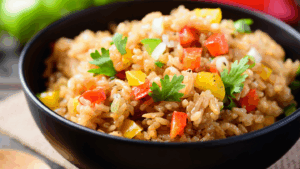
Ingredients:
- 2 cups day-old cooked rice
- 2 eggs, beaten
- 1 cup mixed veggies (like peas, carrots, and corn)
- 2 tbsp soy sauce
- 1 tbsp sesame oil
- 1–2 green onions, sliced
- Optional: diced ham or tofu for protein
Directions:
- Heat sesame oil in a pan, scramble the eggs and remove.
- Sauté veggies until tender, then add rice and return eggs to the pan.
- Stir in soy sauce, cook until evenly coated.
- Garnish with green onions and serve hot.
Fast, flexible, and flavorful—this recipe uses leftovers to create a satisfying, easy meal.
Recipe Tip adapted from Food Network. Read the full article here: How to Make Perfect Fried Rice Every Time With Whatever Is in Your Fridge
Travel Tip of the Week
Scotland’s Highlands: A Refined Fall Retreat

Looking for a peaceful, scenic getaway? The Scottish Highlands offer sweeping vistas, cozy lodges, and rich history—all perfect for travelers seeking tranquility.
Why it’s ideal:
- Off-season serenity: September brings cooler, quieter landscapes—ideal for unrushed exploration.
- Rich culture & nature: Expect majestic lochs, rustic castles, and cultural gems like distilleries or historical towns.
- Gentle pace: Designed for slow travel—ample time for curling up by a fireplace or enjoying scenic bus tours.
Best for travelers who value relaxation, cultural immersion, and nature—all wrapped up in autumn’s muted beauty.
Travel Tip adapted from Travel and Leisure. Read the full article here: Best Time to Visit Scotland
Copyright © 2025. BCA Private Wealth. All rights reserved.
Our mailing address is:
BCA Private Wealth
15 Halton Green Way
Greenville, SC 29607
Disclosure:
BCA Private Wealth is a registered investment adviser. The advisory services of BCA Private Wealth are not made available in any jurisdiction in which BCA Private Wealth is not registered or is otherwise exempt from registration.
Please review BCA Private Wealth Disclosure Brochure for a complete explanation of fees. Investing involves risks. Investments are not guaranteed and may lose value.
This material is prepared by BCA Private Wealth for informational purposes only. It is not intended to serve as a substitute for personalized investment advice or as a recommendation or solicitation or any particular security, strategy, or investment product.
No representation is being made that any account will or is likely to achieve future profits or losses similar to those shown. You should not assume that investment decisions we make in the future will be profitable or equal the investment performance of the past. Past performance does not indicate future results.